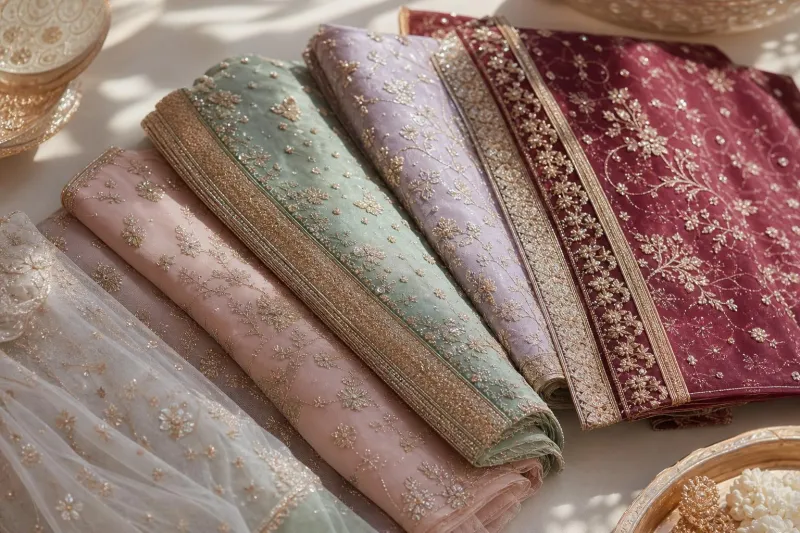
Indian textiles bring together centuries of craftsmanship, beautiful colours, and remarkable versatility. From flowing sarees to embroidered fabrics used in contemporary dresses, these materials offer plenty of inspiration for fashion enthusiasts across Portugal and Europe.
Whether you're attending a multicultural wedding, experimenting with traditional clothing, or creating your own outfit, understanding different fabrics can help you make better choices.
1. Silk: Timeless Elegance
Silk is closely associated with Indian festive and wedding fashion. Its natural sheen and beautiful texture make it suitable for sarees, blouses, dresses, and tailored occasionwear.
Banarasi silk, in particular, is admired for its intricate woven patterns and decorative zari work.
Styling tip: Pair a silk saree with minimal jewellery for an elegant wedding look, or use silk fabric to create a structured evening jacket.
2. Organza: Light, Sheer and Contemporary
Organza is a lightweight fabric with a crisp structure. It is popular for sarees, statement sleeves, dupattas, and layered dresses.
Its translucent appearance makes it especially attractive for spring and summer celebrations.
Styling tip: Choose pastel organza for daytime occasions. For dresses and skirts, consider a suitable lining to provide comfortable coverage.
3. Georgette: Comfortable and Flowing
Georgette is valued for its fluid drape and slightly textured surface. It works beautifully for sarees, flowing dresses, and occasionwear.
For someone wearing a saree for the first time, a lightweight georgette can be easier to manage than a heavily embellished fabric.
Styling tip: Try a georgette saree with a contemporary blouse for an Indo-Western evening outfit.
4. Embroidered Fabrics: The Beauty of Indian Craftsmanship
Indian embroidered textiles often feature intricate threadwork, sequins, beads, zari, and decorative motifs.
These details can transform a simple outfit into something distinctive.
For European fashion enthusiasts, embroidered Indian fabrics can also be incorporated into evening dresses, jackets, skirts, and accessories.
When choosing an embroidered fabric, examine the reverse side, embroidery density, weight, and finishing before deciding on a garment design.
5. How to Choose Fabrics for European Occasions
Different occasions call for different materials.
-
Summer weddings: Lightweight georgette, chiffon, and breathable cotton blends.
-
Formal evening events: Silk, satin, and delicately embroidered fabrics.
-
Winter celebrations: Velvet, brocade, and heavier silk.
-
Creative everyday fashion: Cotton, printed fabrics, and subtle embroidery.
Consider the venue, temperature, garment lining, and how long you will wear the outfit.
6. Where to Explore Indian Fabrics
If you're interested in discovering traditional and contemporary Indian textiles, browsing specialist fabric collections is a useful starting point.
Delhi-based Paras Gallery Fabrics showcases a wide range of textiles, including silk, organza, georgette, embroidered fabrics, and materials used for traditional Indian clothing.
Exploring different textures, patterns, and fabric constructions can help you understand which materials best suit your design.
If ordering from outside India, confirm international delivery availability, shipping charges, and any applicable import taxes before purchasing.
Final Thoughts
Indian fabrics are not limited to traditional clothing. Their colours, textures, and craftsmanship can inspire modern wardrobes across cultures.
Whether you prefer a classic silk saree, a flowing georgette dress, or an embroidered jacket, the best fabric is one that suits your personal style, comfort, and occasion.